 David Summerhays
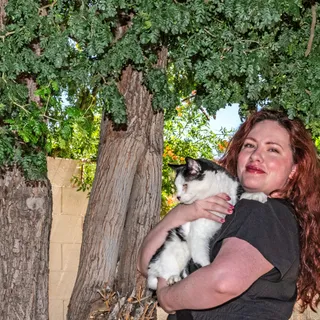
David Summerhays: Hi, everyone. This is the Forging Purpose Podcast. I’m David Summerhays. Today, we have an interview with my friend Sonora. This is a special one. You’re not going to want to miss this one. Sonora, after doing a divinity degree at Vanderbilt, has worked as an intern as a hospital chaplain. And I wanted to catch up with Sonora to ask a number of questions about that. First of all, how are people reacting when they receive really difficult news? How can we react and make meaning even in that first hour of receiving a bit of bad news or perhaps a lot of bad news? And also, how is Sonora figuring out what other people’s meaning frameworks are? How can we detect our own meaning frameworks or those of our friends? And how can we accompany people in those difficult moments to make meaning out of difficult things? But of course, as you know, we need to start by finding out whether Sonora wanted to be an astronaut. Welcome, Sonora. How are you doing today?
Sonora: I’m doing well. In sunny Arizona in the desert. So another wonderful day, though it is quite hot. Oh, man, I bet. Go through those tubes of sunscreen and all that good stuff.
Sonora: Yes, I’m a pretty intense sunscreen person. Caked on. Yeah. Great. Well, thank you so much for agreeing to talk about meaning and all these crazy existential topics. Yeah, we were talking and realized we needed to podcast. So I really appreciate you taking the time to come on and chat. So my first question, and I think I’m realizing this is probably the first question I’ll ask everyone because I think it’s really fun. But so when you were a kid, did you have a vision for your meaningful life?
Sonora: I would say as a kid, I guess in terms of clear goals, it was pretty probably work oriented. Or at least I was always a kid who did well in school. So I think that also pretty early defined my kind of self identity or how I envision myself as like somebody who does something interesting for work or somehow an extension of doing well in school. I don’t think I really had like a concrete idea of what that was in terms of school. And then in terms of because my degrees in divinity, I’ve written a lot about religious stuff. I wasn’t raised in a religious household, so I didn’t really have like a institutional or a kind of clear religious narrative or anything along those lines because my mother is an ex Catholic and my dad is Quaker, but not really a practicing Quaker. You know, like I knew that in theory we were Quaker. So I had like I had some sort of like pillars, I feel like I had. But I don’t think I had a super clear vision of like what I wanted to do with my life. I definitely wanted kids. At some point, I’ve always felt like I have space in my heart for kids and a child. Probably multiple children, but I don’t know. Because now when I’m an adult and I do not feel like I’m close to having kids, so I’m not sure. But that’s definitely what I would have said as a kid is that I want to have kids. Yeah.
David Summerhays: Wow, that’s amazing. I mean, that’s amazing to me. When I was a kid, I had no idea and certainly no sense of like, oh, I’ll be a dad or you know what I mean? So I’m always amazed when people have an idea. So you were OK. OK, so not not an astronaut.
Sonora: No, no, I was kind of trying to figure out. And a lot of my adult life has been this as well is that I am a kind of interdisciplinary jack of all trades. So like it wasn’t just that I was good in school, it’s that I really love math, but I also really love reading. So there wasn’t my kind of a things that were as I got older, I kind of started to accumulate things that I really didn’t want to be. I quickly decided I definitely didn’t want to be a geologist. We went on this family road trip and we just kept stopping to look at these rocks. And I was just like, I hate this. I don’t care that there was water here thousands of years ago. Like this is doing nothing for me in a way that like many other things in my life. I’ve always been very passionate about learning and kind of, you know, picking up interest and stuff like that. So it was more a process of getting rid of interest as opposed to and then trying to narrow and figure out what I’m actually doing. But it turns out you don’t actually have to narrow that much. You can still just kind of fly around and try a bunch of different things in adulthood as well. So that was good to find out.
David Summerhays: Interesting. So you’re like, OK, I’m good at multiple things. I’m good at school. I’ll kind of just go through the school process sort of thing and like figure it out. Like, I really resonate with my say my students who I feel like if you really said like, what do you what’s your ideal life like really and gave them truth serum, it would involve something like, you know, I don’t want to be bothered. I just want to make enough to live, have fun, see my friends.
Sonora: Yep. Yeah, I mean, very that like I want to I think that transfers over to my work and what a lot of people I think relate to in their work situation is like doing something fulfilling, something that’s interesting, something. But ultimately, you got to make money. You got to have money to then do all the other things that you really want to do in life. So that is kind of the reality that we are faced with. Yeah, because then I mean what it actually brings me joy in my life. Fortunately, I do have a job that aligns with a lot of things that I’m interested in. But really, it’s friends, family being out in the world, kind of just basking in the universe, those sorts of things that I actually kind of, you know, fill the soul. Yeah, definitely. And all those sounds super meaningful. I mean, I think that’s the idea is like the that vision for a meaningful life isn’t isn’t so much placed into a career or even having kids. It’s like these relationships, this enjoying life like those are really rich sources of meaning for sure. Yeah. And for me, it’s kind of all in I’ve always been a morbid. I was very morbid kid. I’m learning so much about you already. Like, I’m just not I think other people have a really hard time talking about death. And I think something maybe my brain chemistry, maybe in how I was raised, who knows, it’s just not a problem for me. And for me, everything is about, you know, I come to try to that’s kind of the core of how I live my life is like and also related to a little bit of exciting kind of around that morbidity. But like I could die at any moment. So I thank God that I’m here and I continue onward. And so that’s kind of a pattern, a way of thinking that I always kind of had maybe more consciously as I got older as opposed to more subconsciously when I was younger. But yeah, so for me, I mean, I love life because death will come. So I, you know, might as well be here and do this stuff now because this is such a great I’m just so grateful to be here because I could easily die. You know, like that’s just it’s very close for me in a way that I think it varies for people.
David Summerhays: Hmm. Wow. Okay. Did something happen? Did you have like, did you almost die at some point?
Sonora: No, this is kind of yeah. No, a lot of people, a lot of people do have specific things, you know, whether they were a sick kid or had someone close to die to them. I didn’t really have like a clear traumatic moment. I mean, I’ve always kind of I think struggled with like mental health stuff. I don’t think that stuff is so hard because you can’t be in anyone else’s brain. So you don’t know. You know what I mean? So for me, it became as I got older, like the realization that like, wait a second, everyone else you might be doing something totally different than what I’m thinking about all the time was kind of a little bit radical for me. But then once I got, I mean, yeah, that’s just kind of the way I am. That’s what I mean with the morbid I’m not sure what about me has led to this, but this is how I am.
David Summerhays: Okay, it sounds like basically you just open your mouth and say something that seems to you like a mundane observation and everyone says you’re so morbid. And you’re like, really? Just kind of observable.
Sonora: Yeah, I don’t know. I guess I didn’t really express it with words. I also didn’t talk a lot as a kid. I think I well I did at a certain point, but like I didn’t talk until I was three. And then I was always just kind of a shy, quiet kid. I also did ballet for the first 10 years of my life or since I was three until 13. And ballet is, I kind of say ballet is the first art form I kind of fell in love with. And it’s not about saying things. It’s explicitly about moving and expressing yourself with your body. I think I developed that skill set kind of disproportionately a little bit. So I was that was kind of where I was expressing myself and my energy and my thoughts was internally as I danced. Not really talking with my peers or kind of things about that. Or if we would, you know, I don’t know. So and maybe also I could have gotten more morbid with time. I’m not entirely sure. But yeah, it just wasn’t. I’m always somebody, though, even with like friends, parents and stuff. I feel like people always have told me I’m an old soul. So I think that’s society’s way of saying this kid has got something going on a little bit more. Got some perspective. Yeah.
David Summerhays: I was joking and saying that’s society’s way of saying you’re morbid.
Sonora: Possibly. I don’t know. It’s just and this is something that I continue to deal with that comes up in chaplaincy stuff is that we live in such a death denying culture where people really don’t want to talk about death, where they really don’t want to get anywhere near it and just pretend it just either not talk about it or pretend that you won’t die or all these sorts of things that for me is just not how I operate. So I kind of don’t notice when other people are really hesitant. I do now kind of from a professional, you know, in like a patient interaction, but not like, yeah, I don’t know. I don’t think I’m always the most observant about picking up when people are uncomfortable or unsure about what I was saying or anything like that. I was just off in my own little world. So it kind of didn’t really affect me.
David Summerhays: Yeah. And if it’s just so mundane for you and for them, it’s like they’ve never talked about it, never thought about it. Like, whoa, whoa, whoa, like pumping the brakes and yeah, it’s not easy for you to see that my hesitation, I bet.
Sonora: Yeah, especially as a kid. Yeah, sure. I think I’m a lot more conscious and thinking about these things as an adult as a kid. I was just off to the next thing off to ballet class, literally.
David Summerhays: And, you know, I have the piano here in part because it was I feel like I had a very similar journey around music where except I was much older. Like maybe I started playing at 17, but I felt like words I was like in my circles. Anyway, we didn’t really use words to express like real things, if that makes sense. I remember playing music and being like, oh, my God, like, this is really expressive. I can express myself in a super real, direct, very raw way that I don’t do with words. So, yeah, I mean, years later, it was kind of my project was to like, OK, let me make what I say as meaningful and is like something I was excited about as as the music. So, you know, piano has taken like it’s some of the weight off. If that makes sense, it doesn’t fulfill the same functions anymore, even though I still enjoy it anyway.
Sonora: Now, that totally makes sense to me. It’s part of why I studied like linguistics in university. I think I language is really interesting to me because I don’t really feel like languages. I mean, it is primary in the way that like we all talk. It would be bad if I didn’t have language, you know, like there’s studies on that. It’s not good. But like that kind of distance from like, I don’t know if this is my primary or there’s just so many other ways of expressing myself that it doesn’t exactly feel. I mean, it is natural. But like that kind of distance is always what has interested me. And maybe what made me become kind of a bit of a language nerd because I was like, oh, I want to know more about how we use this and like, what is this crazy tool that our brains do to talk to each other? It’s kind of it’s very interesting. So but I feel like that came not out of a sense of loving language and like feeling like it’s the best way to express myself, but kind of the reverse. So that totally makes sense to me.
David Summerhays: Nice. And so speaking of sort of having the yeah, we’ve gotten into your professional life a little bit like it. And I’m understanding that you like what? Yeah, I would like to pursue this chaplaincy path. Yeah, you want to get further with it. So I don’t I’m not sure if I should start by asking like how how you got into that and how you started on that path or what’s meaningful to you about it.
Sonora: Yeah, no, it is kind of a bit of a it’s not a straight path as life rarely is and also relates to the kind of interdisciplinary. I can’t really pick a thing. I have to do lots of different things. So during Covid, I was in Montreal and thinking about what I wanted to do in the future. And I had in my head my dad’s brother, my uncle, went to Divinity School. So I kind of I knew it was an option. And so I kind of was like, I think that planted the seed. And then I was like, I want to learn more about what the heck is up with Christianity was kind of my main goal in going to Divinity School was just like, what are people doing on Sunday? I know a good amount about being Quaker. But yeah, I really want to know what is up with these questions. What are they doing? And then when I got to Divinity School. So Divinity School is an interesting place because it is both academic and professional. That is what makes it a Divinity School rather than just a seminary, though these terms are a little bit fluid. So Divinity School is associated with the university, which I really wanted to remain associated with the university to do academic stuff, which is still what I do partially for professionally for research. I still work with a professor. But then on the flip side is kind of the professional preparing people to be pastors and chaplains are the two primary professions that come out Divinity School, with the third being community work, organization, activism, nonprofit kind of stuff. And so within that, I was kind of then given the chance to explore chaplaincy in a way that I didn’t really go to Divinity School to be a chaplain. But once I was there, surrounded by people, and especially also at Vanderbilt, the program requires you to do some sort of practicum, like an engagement. You have to for a year be involved in some way and then kind of write on that and think on that. And so then several of my peers were doing chaplaincy stuff. I was like, well, let’s try it. Let’s do it. And I also have a little bit of a background in peer support. And so it kind of struck me as a good melding of my academic interest and kind of learning more about Christianity and particularly in kind of a lived experience. I love all the history stuff, but I also wanted to talk to a bunch of people about how they engage with their faith. And you really find that engagement very clearly and very starkly at the hospital or in health care settings where the rubber is meeting the road in terms of what you believe and how you think about God and how you think about the world and how you make meaning out of life. And as these big changes are happening or just facing big changes, all these sorts of things, it really kind of created a very both intellectually and emotionally and kind of combines all the different things for me. So that’s why I was kind of drawn to the hospital and doing chaplaincy in that sense. But it’s also extremely emotionally taxing, which is why I’m not currently at the hospital. I kind of needed to break and figure out in what way I want to continue my training to eventually be accredited. Because as an introvert, it’s not a super I need a balance of a bunch of different things is also related to doing lots of different things professionally. I like to have a couple different things happening. So being at the hospital all the time, talking to people constantly is not really a good setup for success for myself. But it’s very I really enjoy the work and I find it very stimulating and engaging and meaningful. And yeah, I really like it.
David Summerhays: Yeah. And like what’s let’s say like you have a conversation with someone who then passes away, like not even five, 10 minutes later, like what’s meaningful to you about that?
Sonora: About the interaction self or the person.
David Summerhays: I mean, the work. Yeah.
Sonora: I mean, spending like being with somebody in their last moments, I think is very meaningful. I guess it depends kind of and maybe I should have asked you to have time, but like, I don’t know what is your definition of meaning.
David Summerhays: Yeah, I meant to go into this. Right. Yeah. Yeah, I mean, for me, it’s just it’s pretty generic. I mean, I could probably say a lot about it from my perspective. But yeah, I would say like, first of all, just generally a sense of purpose. I mean, I think we kind of identify a meaningful path by people’s excitement and sort of a sense of like passion and purpose and direction. So, like, kind of know the fruit by or know the tree by its fruit kind of definition. And then, like, it just seems to me that humans are like, this is very Paul Tillich of me to say, but just there’s that division between like we are animals and limited in all these ways. But we have this imagination that just transcends the whole thing. And so we’re kind of trying to find this, like, infinite object or, like, you know, some way of understanding ourselves within this larger whole and yeah, like what the purpose of our lives and often, like, much suffering in those lives and what it all serves and the good that it brings. So I guess that’s how I would define it. Yeah.
Sonora: And I think being in Divinity School, I’m used to kind of phrasing things in a religious sort of way or also through my own theology. Well, I guess to kind of back up a little bit for me, I think, like, I think that’s a good question. I mean, not why I’m Quaker, but, like, what my kind of core theology is, is around the spark of the divine in everyone. So just the I kind of believe there is an inherent value in life and all of life. And so shepherding is a bit of a stereotypical world word, but, like, just not even shepherding. I kind of then as a Quaker, as a capital F friend, I see myself as a chaplain, as a friend to be with. And so I think that’s kind of how I see it. You might have heard me say that it’s a far too much of a typical world word, but, like, just not even shepherding. I kind of then as a Quaker, as a capital F Friend, I see myself as a chaplain, as a friend to be with another person of another spark of light, of divinity, of spirit, of whatever you want to put it. And so being able to be a friend as someone dies, I think, is just. the divine light within me and the divine light within them. I think it’s just very beautiful and kind of in that way, a little bit goes back to kind of the transcending language in that I don’t always, I mean, I can articulate it, but like something also just about being with other people, I find kind of inherently valuable. And to know that as you’re going, that somebody is there with you, I think is very, it’s just very meaningful. I think it sucks to die alone. So it’s maybe even less the, except for of course, we all do dialogue. So it’s kind of, yeah, it goes back and forth. It’s also a little bit hard talking the abstract. I don’t know, I haven’t really had a lot of just me and a person as they’re dying. Usually there’s family, there’s other medical personnel, there’s other factors happening. There’s kind of an unpredictability, a slowness of death. Death takes a lot longer than I think people realize it does sometimes, not always, but it could take just hours of you and a family just kind of chilling, kind of waiting for somebody to die, but also just being with them as they transition into the great abyss. So it depends on the exact scenario than how I would like write it up in a chaplaincy training context. But I think there is, I personally continue to find meaning and value and I hope that other people do by that kind of simple idea of friendship, of being with somebody. Yeah, it sounds like in part there’s a sense of you would just hate for someone to die alone when there could be a chaplain available and for you to do that and to interact those, as you said, divine sparks, I guess you could say, just creates this like transcendent moment. So it just sounds like, yeah, like could be really, really beautiful. Yeah, it just depends. Cause it’s not to say that, and I think this gets to a little bit of the problem with being in a death denying culture. It’s like when you don’t even talk about it, then you kind of are unfamiliar with what a good death looks like versus what a, I would say a bad death or a death that I wouldn’t wish for myself. And so I guess I also frame things around trying to get towards that good death, which to me does involve other people with you. To various degrees, depending on your relationship with family and friends, your actual physical proximity to people you care about. So, if you’re calling your family member on the phone, to me, that’s also a good step. It’s not like, I’m not ranking, but I think that is a little bit part of the job of chaplaincy, particularly as it relates to death. And chaplaincy isn’t just about death, though people love to. A common refrain is, oh, am I gonna die? Like, did they say to chaplain cause I’m gonna die? It’s like, no. But yeah, that kind of getting towards a good death, I think is part of the job as well.
David Summerhays: The only reason I ask about death is because, well, I’m a teacher, so I’m teaching young people. And so the meaning of that is so much about empowerment later in life. And I’m just trying to think if I, let’s say I poured my heart and soul into a classroom that I don’t even have to say they all died. Let’s just say they don’t listen. They don’t hear anything that I said. That’s a kind of death right there. Like, I would be caught in a sense of, “what have I accomplished?” And even if I accomplished little things, I’d feel like, boy, I poured all this effort into these guys and they’re gone. And that moment is gone.
Sonora: Yeah, I guess this is a little bit of a thing about me in that I’m not very competitive or results oriented. Like, I don’t know. To me, if I put a bunch of effort in, then that’s kind of part of what was valuable about it. I’m proud of myself for putting the work in. If you didn’t, if I’m teaching and no one listened, then that’s kind of on them. Given the, with the caveats of I wasn’t teaching badly or, but like if truly you’re just uninterested or there are other things happening in people’s lives, then that kind of is what it is. I don’t know. It doesn’t really create a anxiety within me. So also if I spend a day at the hospital kind of, or again, I’m not at the hospital at the moment, but with somebody who is, if we don’t really get anywhere or it’s kind of like, whatever, I don’t really see it as like time wasted. It’s still time. I’m still in this great, wonderful world. I kind of go back to that greatness of life in general and thankfulness to be here. So it just doesn’t, I do get obviously frustrated, but I’m just not kind of, that’s not really what motivates me, I guess, is the kind of results or external validation from other people kind of stuff isn’t what does it for me. What does it for me? So I’m kind of, I think you also have to be okay with like the fact that you’re not gonna get feedback from this person who you just helped die, you know? Like they’re not gonna fill out a form afterwards and be like, was this chaplain a good support during this trying time? You know, so like you also have to be okay with truly letting people go and never knowing. Yes, and also in the, I also, that’s the thing I do like about the hospital is that you’re kind of in a set environment. So I mean, people can, if you really form a relationship, you can continue it outside of the hospital, but I also really appreciate that profession boundary of like, no, I’m affiliated with the hospital. I am here to help you while you are patient of the hospital, not your kind of personal spiritual advisor pastor for life, you know, which helps me because I would rather stay in this current moment with the scenario. It’s just a different type of pastoral work. So that really works for me. But I, you know, from my peers that, you know, like working in a church and really building a community is another kind of way to kind of go about that. And that doesn’t quite appeal to me. So I think it’s a little bit personality preferences as well. I kind of like that randomness of being in the moment and seeing what happens and giving myself grace and space for if it wasn’t particularly fulfilling or meaningful or purposeful or kind of didn’t go great or whatever to kind of give a little space, leave some room for spirit and just kind of continue on my way. So, yeah.
David Summerhays: Wow. So I’m just trying to put it into words. It’s that, yeah. So let’s say you have like a difficult interaction. In a way, it’s like, what counts to you is you doing your best. It also sounds like the limits of the hospital keep protect that like introvert side. It’s like, listen, you can’t keep calling me. I’m not on duty.
Sonora: I’m not giving you my phone number.
David Summerhays: Yeah, exactly. Yeah, not giving the phone number. So yeah, you need that introvert space, but also, yeah, it sounds like the valuable thing is, yeah, you gave an opportunity, you opened a door, whether they walk through it or not, that’s their choice and that’s what you’re trying to do is just give that opportunity.
Sonora: Yeah, and I’m just a big proponent of, you just don’t know what other people are. You just don’t know, which is kind of what I enjoy. I enjoy the conversation of figuring out what somebody else’s kind of deal is, what their life, what they’re like, what their theology, what is driving them. I find that really interesting, but I kind of start from a place of, yeah, I have no idea. So I can only do the best that I can do. I can account for myself. I can be aware of the baggage that I’m bringing, all those sorts of things. But then I just kind of try to take people as they show up because, you know, projecting or assuming things of people has just never served me. It’s always been more interesting and more kind of fun and more, a little bit more spirit, life filled to be surprised.
David Summerhays: So that was my conversation with Sonora [part 1]. Thank you so much to her for coming on and sharing her wisdom with us on this show. You know, I think one of the main things I’m reflecting about in listening to our conversation is the way Sonora is able to not be competitive and not be results oriented. I think that’s amazing to just say, hey, I did my best and that’s worth doing. I am so competitive, I am so results oriented. I feel really upset if things didn’t go a certain way. I want certain results out of the things that I do. But I think that’s an incredible skill to learn how to let go and enjoy the adventure of not knowing and not knowing the impact of what we do. So that was, for me, a really, really striking quality that Nora has that I need to work on a little bit more. I’m also really struck by this notion of the good death as being really worthwhile. And also what Sonora said about movement being her first language. I think that’s really interesting and it makes me wanna move a little bit more. There’s a part two of this podcast, so don’t go anywhere, it’s really worth a listen. As we get more into, yeah, what people need in those last moments and it really surprised me. I’m so glad that you’re here listening to this podcast, being part of this community, because I think this is a movement to talk about meaning more. I think as we’re gonna see as this podcast goes on, that this problem, this struggle with meaning has a lot of ramifications throughout the rest of society and talking more about this issue is gonna really help have better politics, have better policies around meaning. So, please help out as best you can by liking and subscribing any way you can about this podcast. If you wanna learn more, you can go to forgingpurpose.org or check out summerhays at bluesky. See you in the next one.